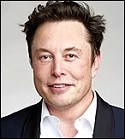
Elon Musk, CEO of Tesla
March 31, 2026: On Monday, Congresswoman Maxine Waters (D-CA), the Ranking Member of the House Financial Services Committee, along with U.S. Senator Elizabeth Warren (D-Mass.), Ranking Member of the Senate Banking, Housing, and Urban Affairs Committee; and Senator Sheldon Whitehouse (D-RI ), Co-Chair of the Senate Caucus on International Narcotics Control sent a letter to Scott Bessent, Secretary of the Treasury, raising questions about the extent of Elon Musk’s role in the Treasury Department decision to limit key requirements of the bipartisan Corporate Transparency Act (CTA). The lawmakers expressed particular concern given new reporting that Mr. Musk uses a network of dozens of secretive companies that are potentially the same type of entities that would be subject to the law’s transparency requirements. (See Wall Street On Parade’s previous reporting on Elon’s Musk’s threat to national security: The U.S. Government Is Plowing Billions into SpaceX, Overlooking Drug Use, Sex Parties, and Elon Musk’s Coziness with Putin.)
“(N)ew reporting has revealed that Mr. Musk uses a network of dozens of secretive companies—potentially the type of entities that, under the CTA, are required to report ownership information to the Treasury Department. It would be deeply troubling if Mr. Musk intervened in any way to limit these transparency requirements,” wrote the lawmakers.
“Congress passed the CTA with support from the first Trump Administration, after extensive negotiations between Congress, the Administration, law enforcement organizations, state governments, anti-corruption advocates, financial institutions, and small businesses,” the lawmakers emphasized. “But in March 2025, Treasury abruptly changed course… Treasury issued an interim final rule removing ‘the requirement for U.S. companies and U.S. persons to report beneficial ownership information’ to FinCEN.” Congress drafted the law to cover those domestic entities and U.S. persons.
The lawmakers continued in their letter:
“Treasury has taken this approach despite ample evidence that criminals and foreign adversaries use shell companies or opaque corporate structures in the United States.”
“In other words,” the lawmakers summarized, “the Treasury Department announced its plans to gut the CTA one day after Elon Musk, who at the time served as the head of DOGE, announced that he would ‘look into’ the law. Mr. Musk owns a slew of private companies that, had Treasury continued to enforce the CTA as required in statute, would likely have been required to report their true owners to FinCEN. Instead, the Treasury Department issued an interim final rule that permits entities tied to Mr. Musk to continue operating in obscurity.”
Last year, Ranking Members Waters and Senator Warren launched a probe into the Trump Administration’s gutting of the CTA. In the months since the Treasury Department reversed course on implementing the law, new reporting has shown how the decision makes it easier for criminals and adversaries to move money through the U.S. financial system:
- The Trump Administration itself published several documents showing how Chinese money laundering networks use shell and front companies to launder drug proceeds and illicit funds for drug cartels.
- The Treasury Department published an analysis criticizing three foreign jurisdictions for having “opaque corporate registries” that Iran exploits to evade sanctions—while simultaneously gutting corporate transparency requirements in the United States, where Iranian sanctions evaders have been known to operate.
- The Government Accountability Office (GAO) released a report finding that “bad actors [hiding behind shell entities] may target federal programs… to improperly receive federal contracts or fraudulently access federal benefits.” Yet the Trump Administration eliminated requirements that U.S. companies provide this information—increasing the risk of fraud.
- The Financial Action Task Force issued a new warning that shell companies provide criminals with a “getaway car” to evade law enforcement.
- Law enforcement groups came out in opposition to Treasury’s decision, stating that “it is the criminal enterprises—drug traffickers, money launderers, and their financial enablers—who stand to gain if this law is weakened.”
- New reports indicate that Jeffrey Epstein, already known to have used dozens of shell companies, exploited U.S. Virgin Islands-registered shell companies to facilitate sex trafficking after bank officials raised concerns about his constant cash withdrawals. Treasury’s decision to roll back enforcement of the CTA means that shell companies based in the U.S. Virgin Islands can stay anonymous.
The lawmakers are requesting detailed information on Elon Musk’s involvement in the Treasury Department’s efforts to suspend CTA enforcement no later than April 13, 2026.
Related Articles: